It looks like the author (Dr. Jesper Zedlitz) of that genealogy net metasearch has intentionally hidden the parameter passing. That search does some background polling of sites that is bot-like behavior.
I think the search can only be limited to the Meta search homepage. There are so many databases behind it that it can’t be searched individually.
It’s searching by last name and location. I can’t send a search link because I always get an empty search form.
Enter “Walter” as the last name in the top line and “Erbach” as the location in the bottom line.
3 additional navigation types are supported. The full list:
class SupportedNavTypes(Enum):
    PEOPLE = "People"
    PLACES = "Places"
    SOURCES = "Sources"
    FAMILIES = "Families"
    EVENTS = "Events"
    CITATIONS = "Citations"
    MEDIA = "Media"
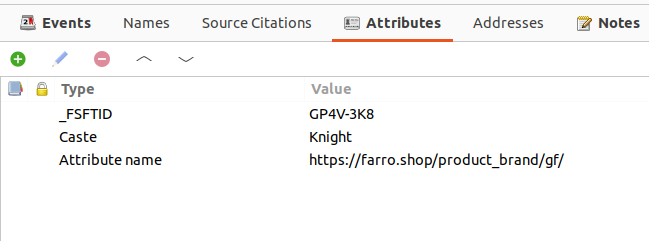
The last 3 dont have variables yet, but they support attributes links. These links are shown in WebSearch if they are found in attributes. An example for Media page:
I think yes, It will be gone after update. But you can use UserData directory where your updates in csv are safe. You can read more in README in section " 6.2. User-defined CSV files" GitHub - jurchello/WebSearch at v0.42.23
Release v0.43.23 is only finding parameters for a few csv entries. (The static_links.csv definitions were working. The common-links.csv were not working.) All the rest are showing 0/0
And for some reason the hotspot for showing the “semi-transparent toast”. (It that the same as a “Tooltip”?) For the FindAGrave example below, the pointer had to be on the row above. When the actual FindAGrave row was indicated, it showed the MyHeritage toast.
For the bottom set of “Configure” checkboxes, please simplify by using the same consolidated header format as the “Enable CSV Files” section in a “Show” section :
I can add it to minor tasks for future. Varibles - such naming I use across all the project including README. So, Variables should be renamed everywhere to maintain naming consistency.
On the contrary, thank YOU for being open to suggestions. It must be difficult to accept them as constructive (which is my intention) rather than criticisms. Your being so receptive makes us volunteer more effort in supporting your work. Thanks again.



 .
.